
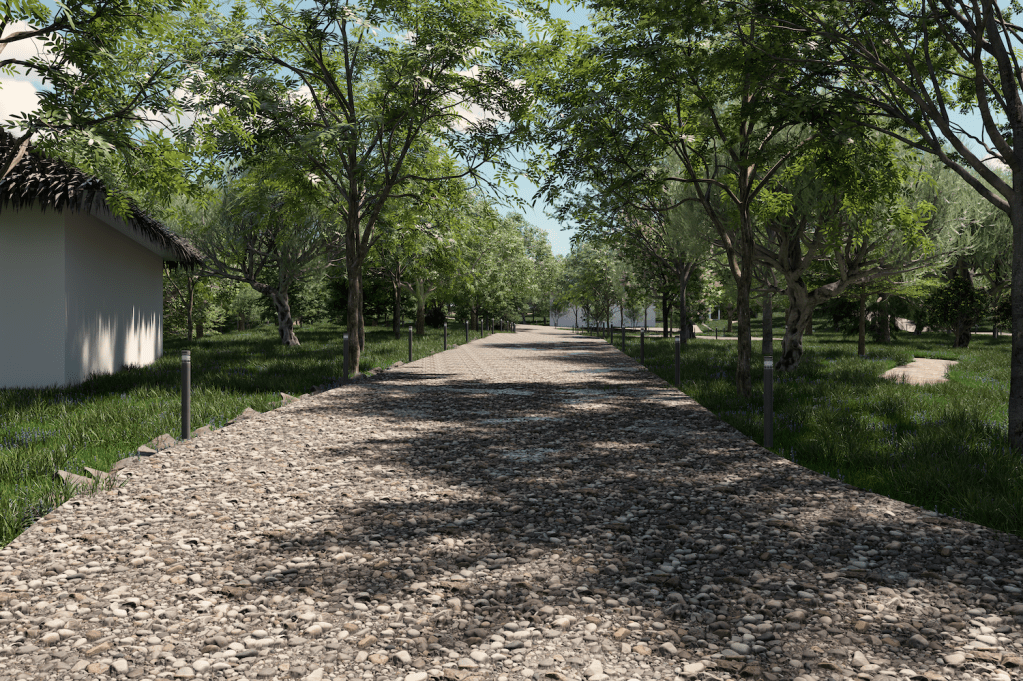
Plot Area: 38 hectares
Project Type: Agricultural and Leisure Development
Services: Master Planning
Year: 2024
Status: Ongoing – Schematic Design Stage
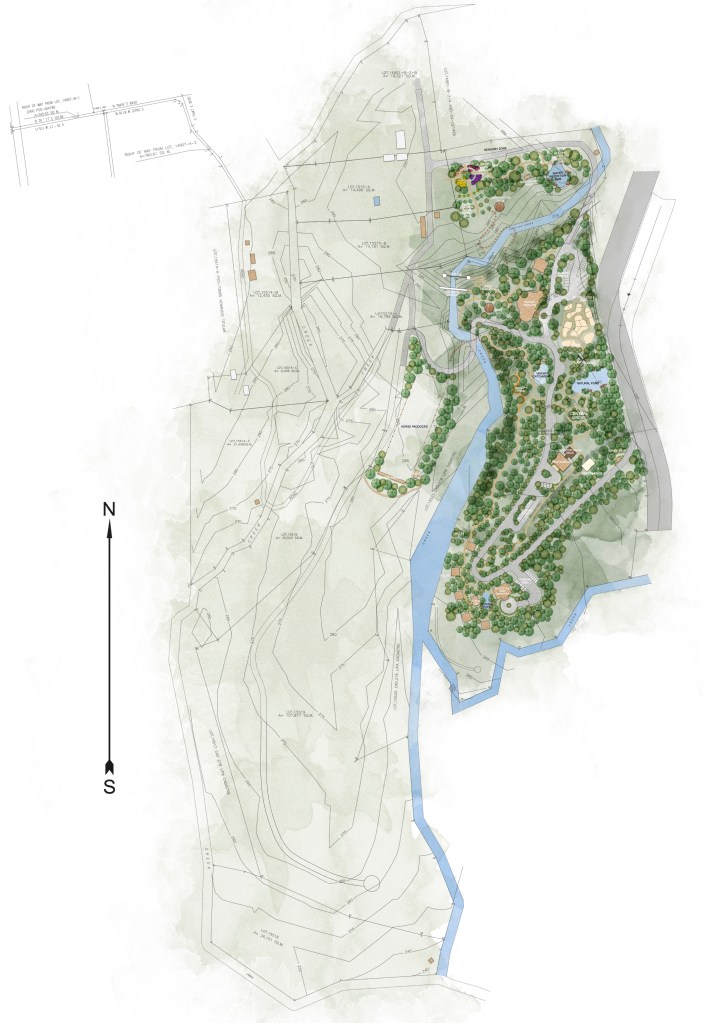
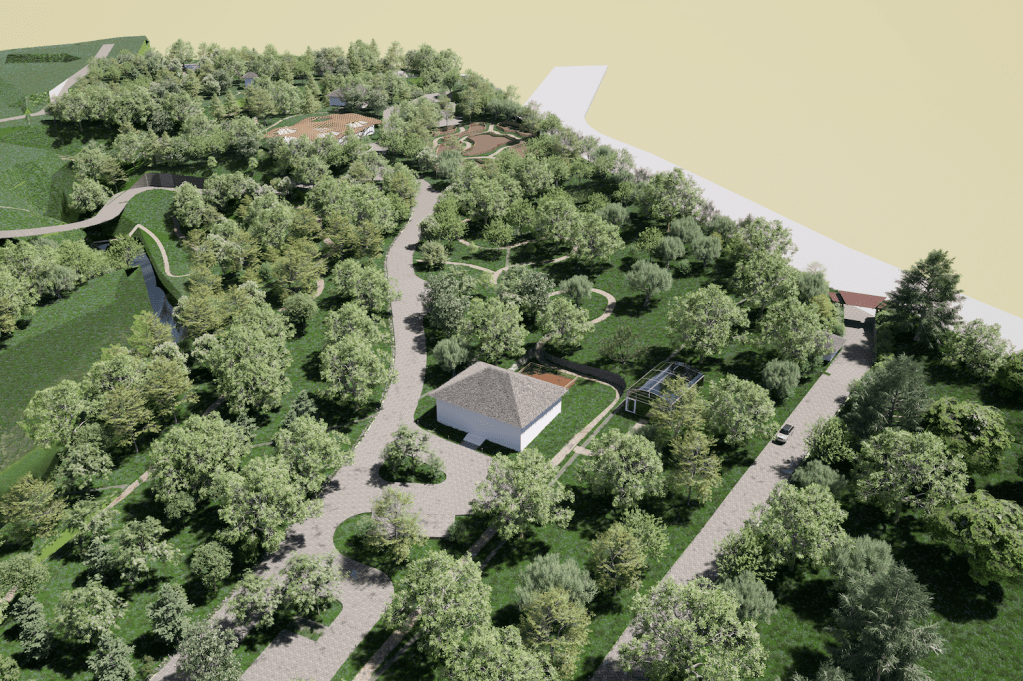
Phase 1 Schematic Master Plan
Overview of Concept Plan
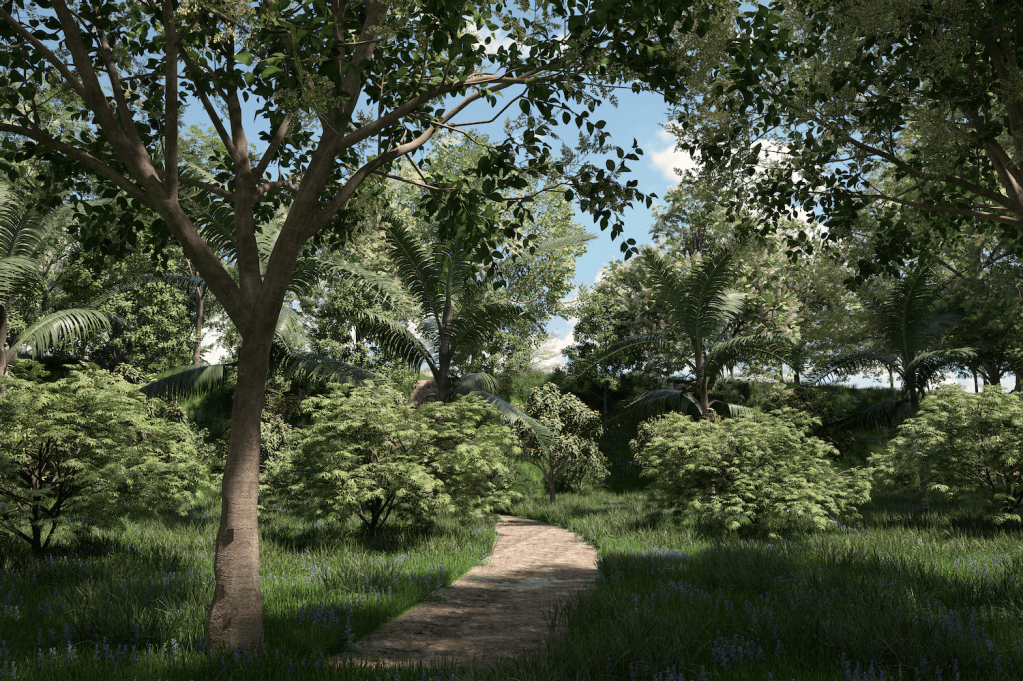
A Harmony Between Nature and Design. The site presents a rare opportunity to work within a landscape that defies typical modern classifications. Resembling a rainforest in some areas and open meadows in others, it is a terrain shaped by rugged topography and thriving natural vegetation. Every portion of the land carries the character of untouched nature, offering an environment that encourages reconnection with what is essential and enduring.
The concept for the development is envisioned as a place of renewal, an integrated landscape where human habitation and ecological systems coexist in balance. Guided by principles of permaculture and sustainable design, the master plan aims to create a self-sustaining environment that nurtures both the land and its users. By blending natural processes with considered spatial interventions, the development becomes a living system that supports restoration, learning, and well-being.



Design Philosophy
Studio Terrano’s vision begins with respect for the site’s inherent qualities: its topography, hydrology, and ecological fabric. From the earliest stages, the design approach has been to preserve the land’s natural form and allow it to inform the placement and scale of built interventions. Each development area is carefully delineated to ensure that human activity harmonizes with the existing environment.
The result is not a singular architectural statement but an evolving landscape framework that accommodates activity and rest while sustaining the integrity of the ecosystem. Proposed raised structures minimize ground disturbance and maintain natural drainage patterns, while integrated green infrastructure enhances the site’s resilience over time. The design ultimately prioritizes longevity and ecological balance over transformation, honoring the relationship between people and nature.



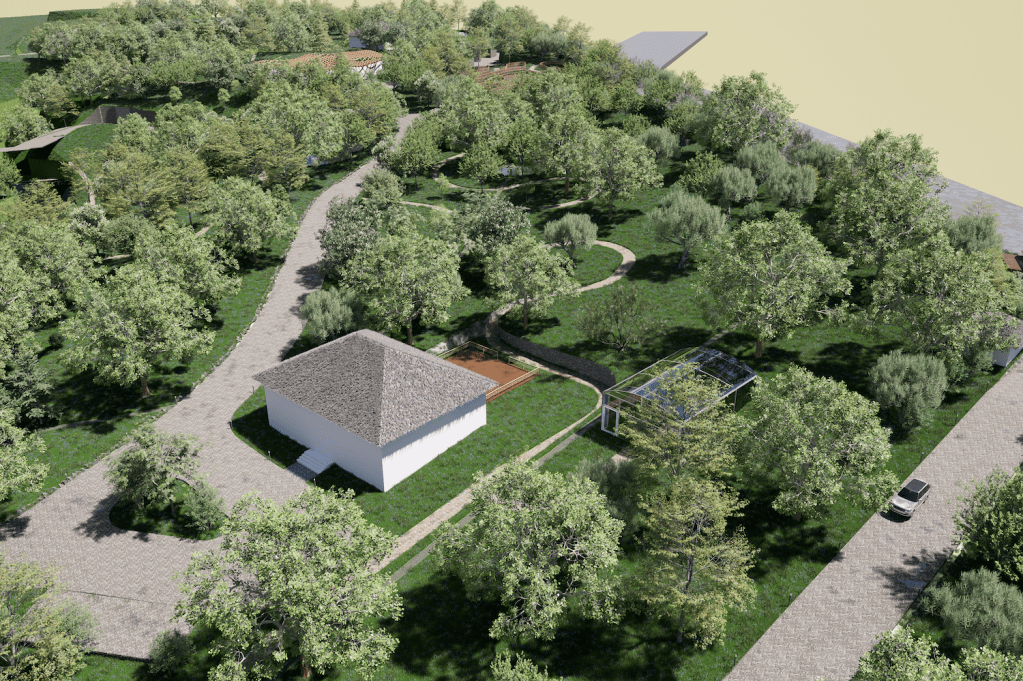
Key Zones and Development Areas
1. Commercial Zone
Designed as a space for nourishment and community, this area encourages interaction within a natural setting. Key components include:
- Restaurant and Greenhouse: A central dining facility linked to on-site food production systems.
- Cafés: Smaller nodes offering spaces for rest and informal exchange.
- Main Pavilion: A flexible venue for gatherings, complemented by aviaries and open gardens.
- Central Grove: A dynamic landscape with potential for thematic gardens and educational features.
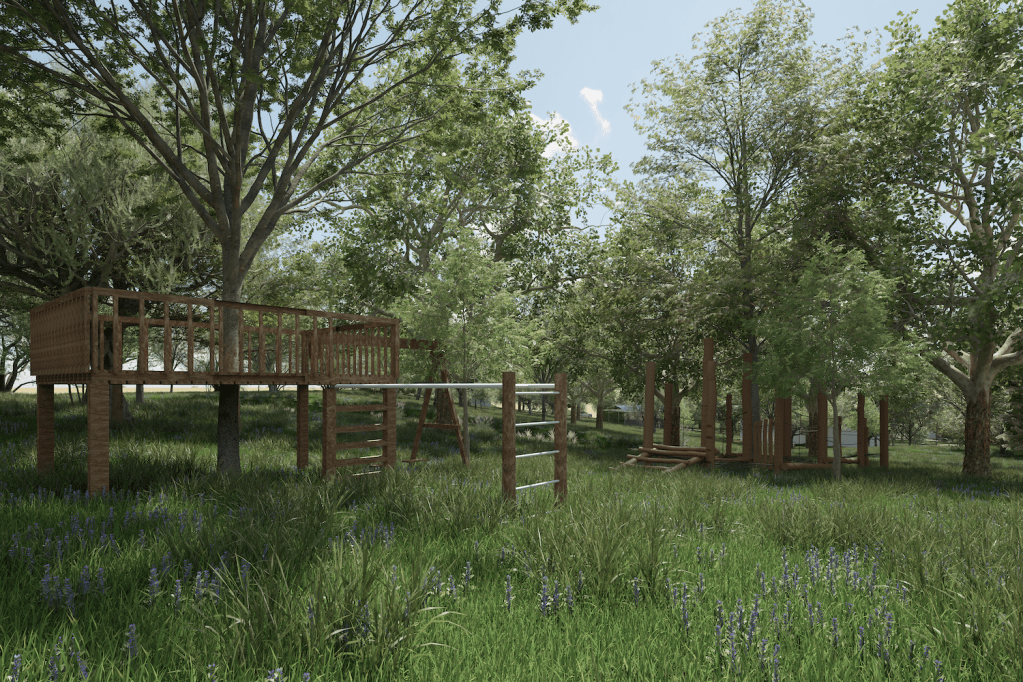
- Children’s Play Area: A nature-based play zone shaped by the rolling terrain.
- Petting Zone: An interactive area designed to encourage learning about animals and their ecological roles.
2. Adventure Zone
This portion of the site invites exploration and discovery through:
- Trails and Footpaths: A network of routes offering varied levels of challenge and perspective.
- Observation Decks and Resting Sheds: Viewing points for reflection and environmental appreciation.
- Rainforest Area: Preservation and enhancement of existing woodland ecology.
- Canopy Activities: Elevated features such as tree nets, suspension bridges, and low-impact adventure elements.
3. Natural Sensory Zone
This area focuses on the restorative potential of the landscape and the sensory experience of nature:
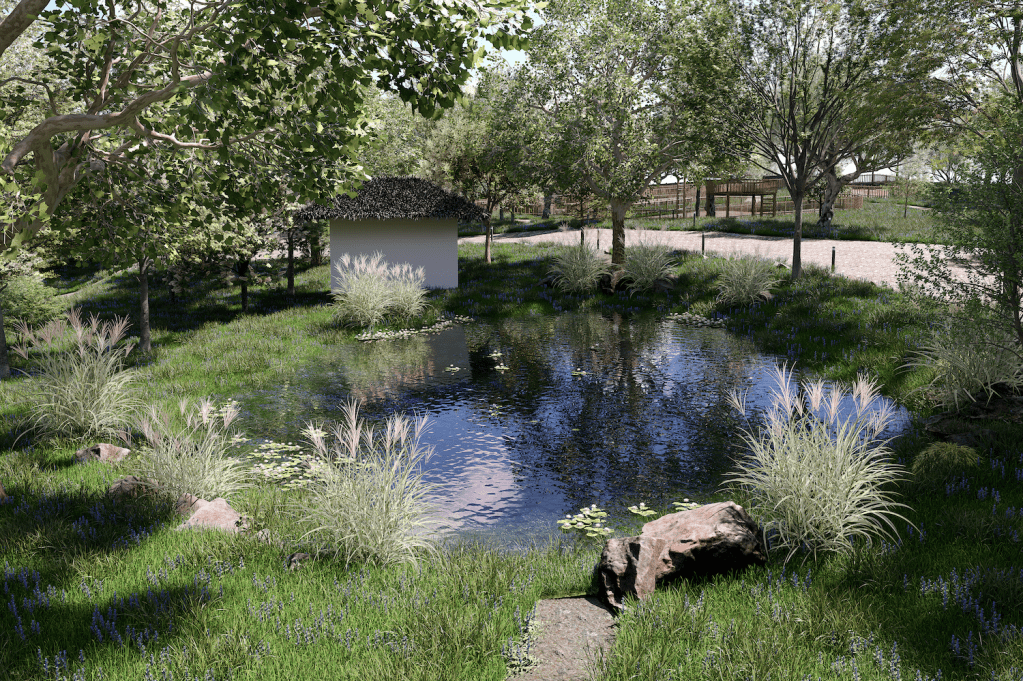
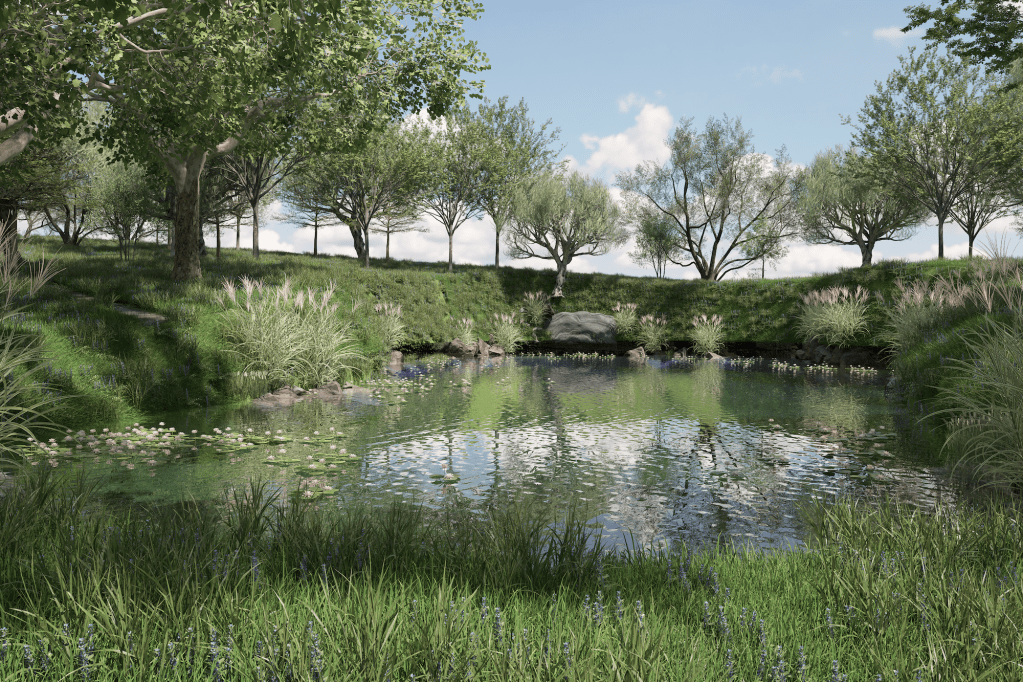
- Water Features: Naturalistic elements that provide sound, movement, and water management functions.
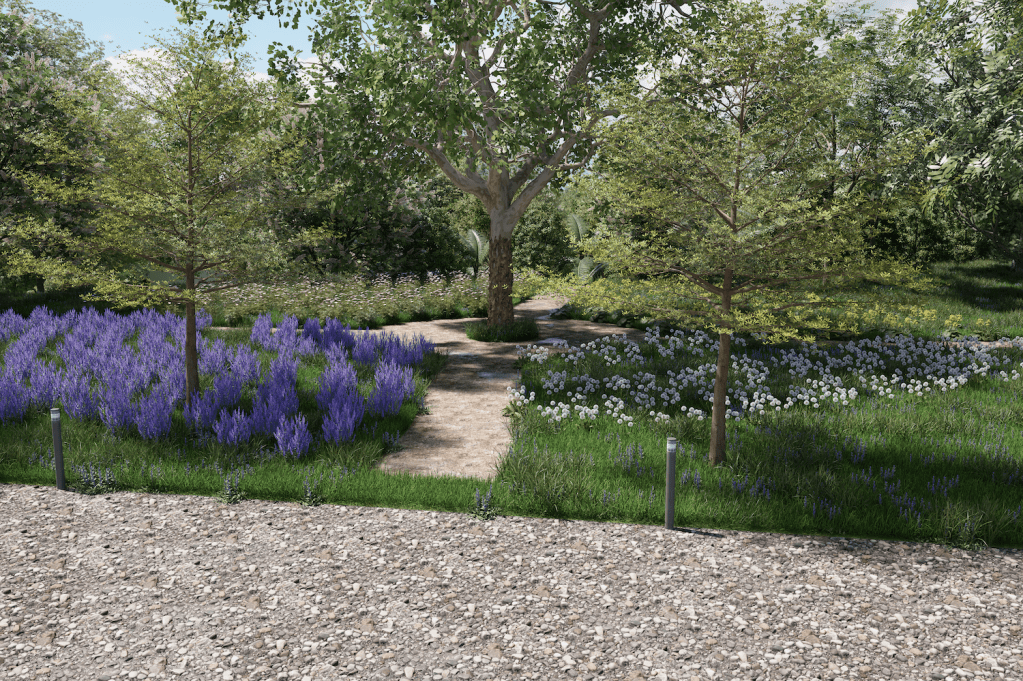
- Themed Gardens: Planting areas designed to stimulate scent, color, and taste.
- Tactile Elements: Textures in stone and water that invite physical interaction.
- View Deck: A point of contemplation offering wide perspectives of the terrain.
- Meditation Shed: A small retreat space for mindfulness and solitude.
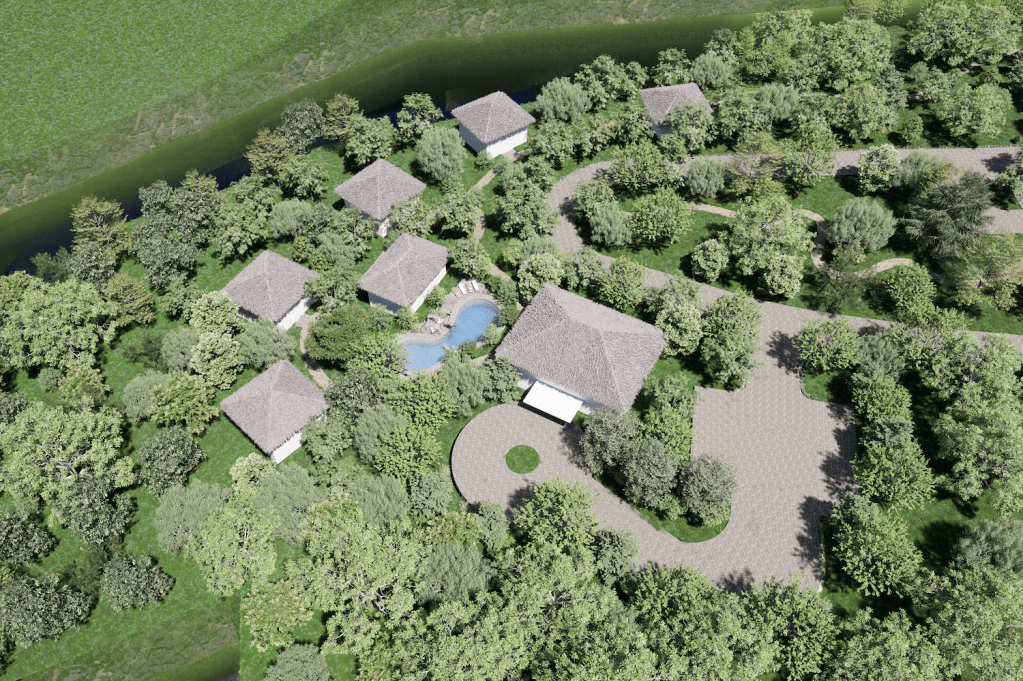
4. Hospitality Zone
Envisioned as a quiet refuge for longer stays, this zone integrates comfort and simplicity within the landscape. Components include:
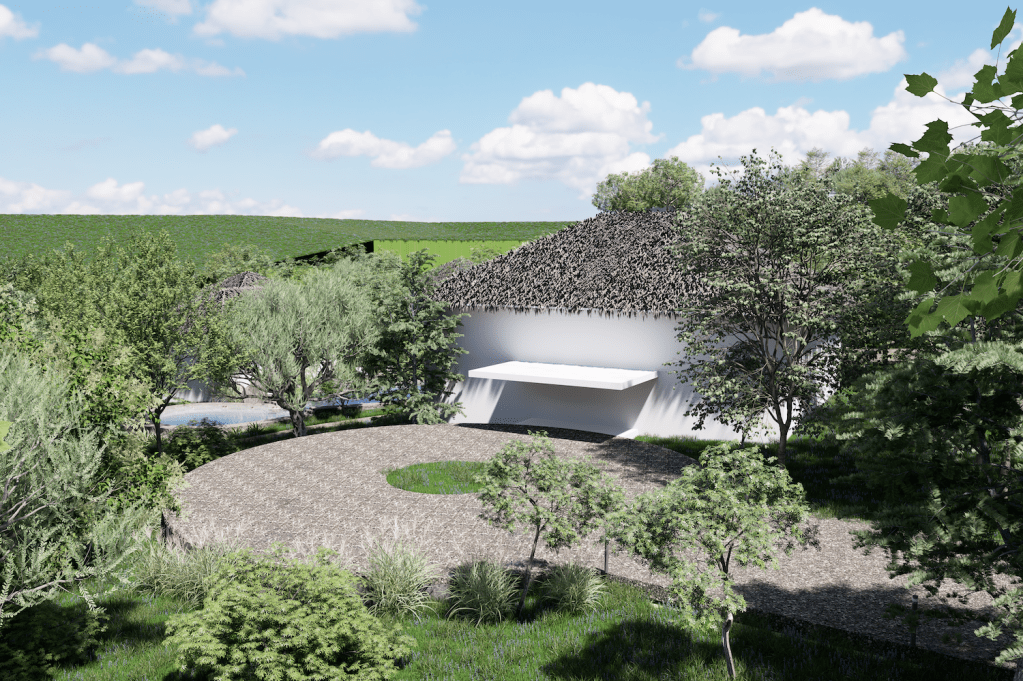
- Arrival Pavilion: Reception and support facilities introducing guests to the environment.
- Library of Nature: A curated space for reading and reflection on the human–nature relationship.
- Natural Pool: A swimming area designed to merge with the landform and planting palette.
- Guest Villas: Modular units positioned for privacy and minimal site disturbance.
- Wellness Spaces: Dedicated areas for yoga, spa treatments, and guided relaxation.

A Place for Connection and Renewal
This development is conceived as an environment where the boundaries between built and natural space are intentionally softened. It is a landscape that encourages participation rather than consumption, where engagement with nature becomes a central experience. Every path, structure, and landscape element is designed to foster connection, reflection, and renewal, aligning human presence with the enduring rhythms of the land.
 Studio Terrano
Leave a comment