
Sustainable design is essential for creating resilient urban spaces that support environmental health and human well-being. Here are key sustainable design strategies for urban planning and development.
1. Storm Water Management
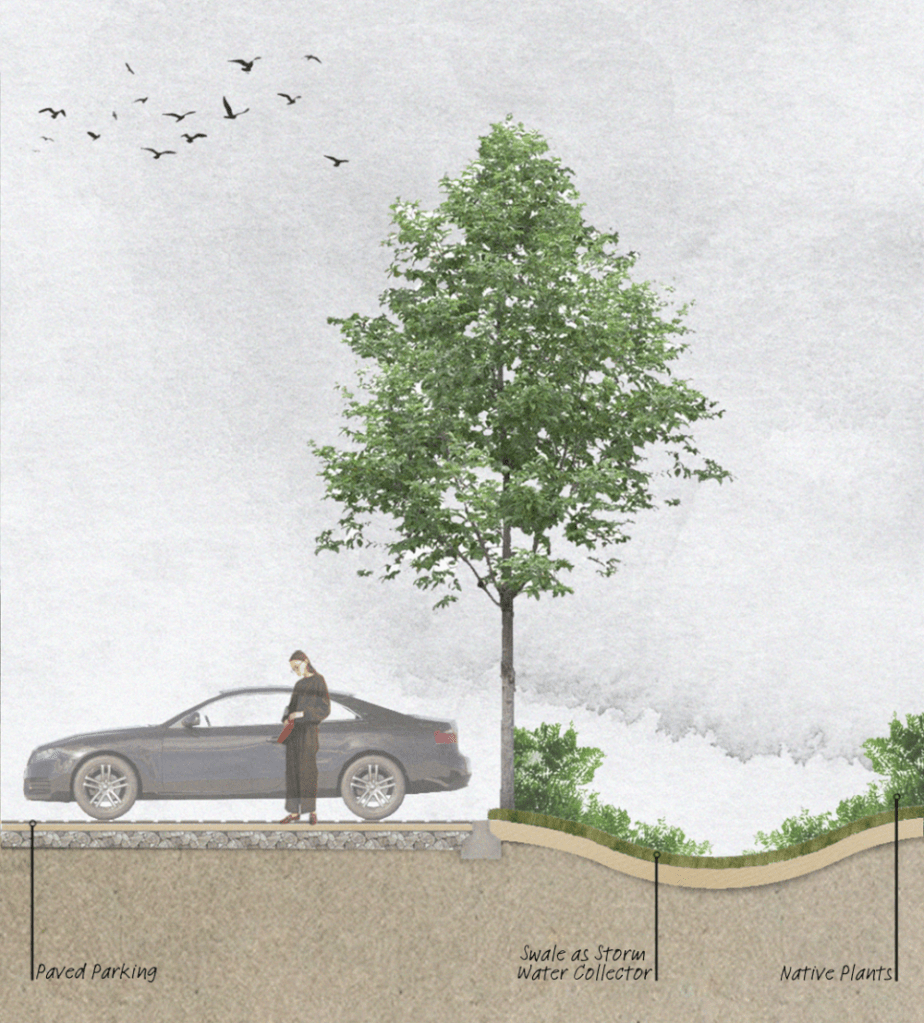
Managing stormwater helps cities prevent flooding and improve water quality. Green infrastructure, such as swales and rain gardens, naturally manages runoff, reduces pollution, and cools urban areas.
Sustainable Urban Drainage Systems (SUDS) Swales are key to SUDS, mimicking natural water cycles to handle runoff.

Benefits:
- Flood Mitigation: Slows and absorbs stormwater, reducing flood risks.
- Water Quality: Filters contaminants.
- Groundwater Recharge: Promotes water infiltration into soil.
- Erosion Control: Manages water flow to reduce erosion.
- Ecological Value: Provides habitats and aesthetic benefits.
2. Sustainable Water Management
Efficient water use strategies like greywater recycling and rainwater harvesting conserve water and reduce reliance on municipal systems.
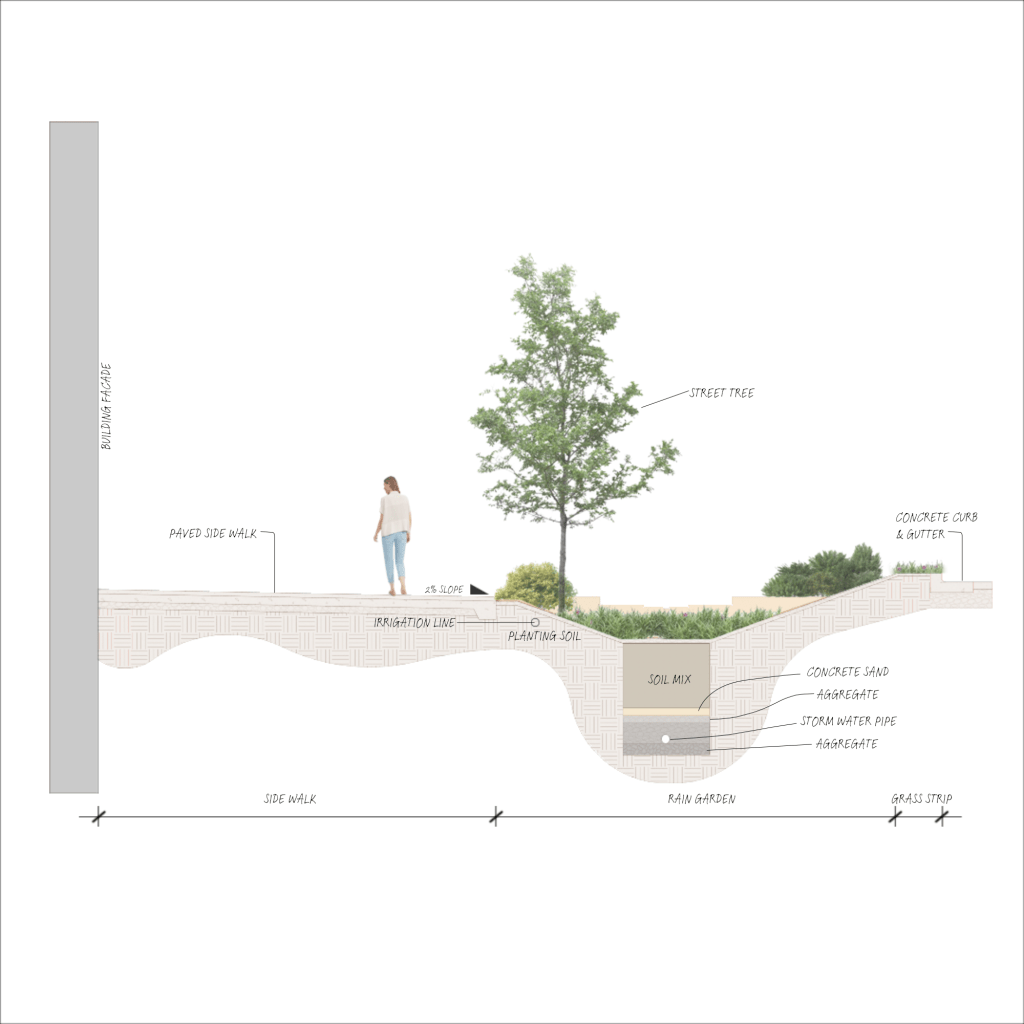
Rainwater Harvesting Collects and stores rainwater for reuse, reducing surface runoff and improving groundwater recharge.
Concept: Rain Gardens Rain gardens manage rainwater, reduce sewer system pressure, and can be scaled for various projects, from backyards to parks.
3. Passive Design Principles
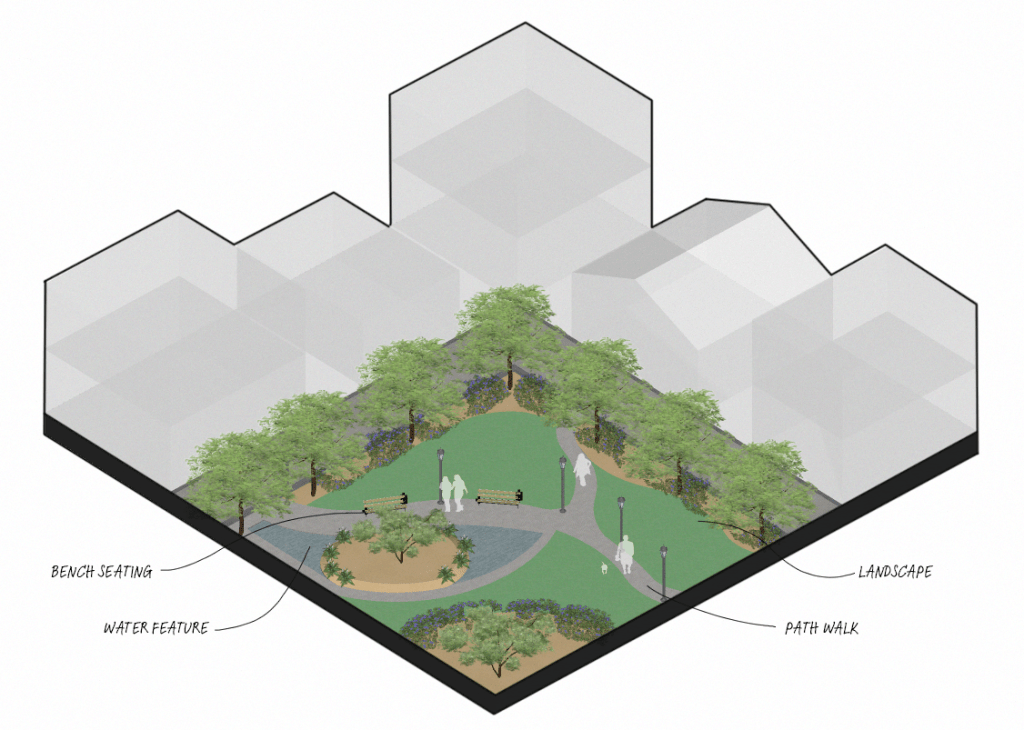
Passive design minimizes energy use by utilizing natural light, ventilation, and thermal mass. Urban green spaces—parks, gardens, and green corridors—help regulate temperatures and improve air quality.
Benefits:
- Improved Air Quality: Green spaces absorb pollutants.
- Temperature Regulation: Cools urban areas through shading and evapotranspiration.
- Enhanced Biodiversity: Supports diverse urban ecosystems.
 Studio Terrano
Leave a comment