
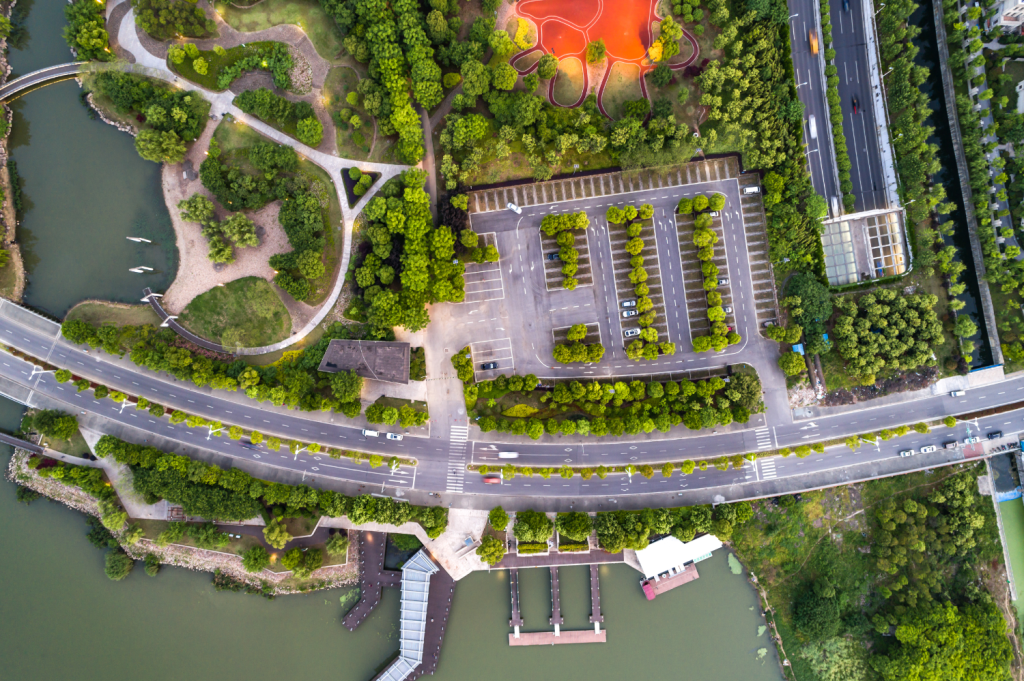
Blue-green infrastructure refers to a network of natural and semi-natural elements designed to manage water resources, provide environmental benefits, and enhance urban resilience. It combines green infrastructure (such as parks, wetlands, and vegetated rooftops) with blue infrastructure (including engineered water management systems). Here are some examples of blue-green infrastructure:
- Rain Gardens: Rain gardens are designed depressions filled with native plants and soil that capture and absorb rainwater runoff from impervious surfaces like rooftops and roads. They help filter pollutants and reduce stormwater runoff.
- Green Roofs: Green roofs are rooftops covered with vegetation, which can reduce stormwater runoff, insulate buildings, and provide habitat for wildlife. They also improve air quality and reduce the urban heat island effect.
- Permeable Pavements: Permeable pavements are surfaces (such as porous asphalt, concrete, or pavers) that allow rainwater to infiltrate into the ground rather than running off into storm drains. They help recharge groundwater and reduce flooding.
- Urban Wetlands: Constructed or restored urban wetlands provide flood storage, water purification, and habitat for wildlife. They can be integrated into urban parks or naturalized areas.
- Stormwater Ponds and Basins: These engineered water management features collect and temporarily store stormwater runoff, allowing sediments to settle and pollutants to be removed before the water is released or infiltrated into the ground.
- Bioswales: Bioswales are vegetated channels or ditches designed to slow down, capture, and filter stormwater runoff. They are often planted with native vegetation and can be integrated into streetscapes.
- Green Streets: Green streets incorporate a combination of green infrastructure elements like bioswales, permeable pavement, and street trees to manage stormwater while enhancing the urban environment and promoting walkability.
- Sustainable Drainage Systems (SuDS): SuDS are comprehensive systems that incorporate various blue-green infrastructure elements to manage stormwater in an integrated and sustainable manner, reducing the risk of flooding and improving water quality.
- Riverbank Restoration: Restoring natural riverbanks and floodplains can enhance the capacity of rivers to absorb excess water during heavy rain events, reducing the risk of urban flooding.
- Rainwater Harvesting: Rainwater harvesting systems collect and store rainwater from rooftops for various uses, such as irrigation, toilet flushing, and even potable water supply in some cases.
- Floodplain Zoning: Planning regulations that restrict development in flood-prone areas or require elevated construction to mitigate flood risk can be considered a form of blue-green infrastructure policy.
- Combined Sewer Overflow (CSO) Management: Cities may implement CSO management strategies that involve diverting stormwater away from combined sewer systems to reduce the risk of overflows and water pollution.
These examples illustrate the diversity of blue-green infrastructure solutions that cities and communities can adopt to address water management, urban resilience, and environmental sustainability in densely populated areas. The combination of these elements can help create more sustainable and resilient urban environments.
In terms of planning and design approach, blue-green infrastructure incorporates natural elements like water bodies (blue) and vegetation (green) into urban environments. When integrated into a master plan, blue-green infrastructure can have several significant effects:
- Environmental Benefits:
- Stormwater Management: Blue-green infrastructure can help manage stormwater runoff, reducing the risk of flooding and improving water quality. Features like green roofs, permeable pavements, and constructed wetlands can be integrated to absorb and filter rainwater.
- Biodiversity: Incorporating green spaces and water bodies into the master plan can support biodiversity by providing habitats for plants and animals. This can enhance overall ecological health in the urban area.
- Air Quality: More green spaces can contribute to improved air quality by absorbing pollutants and providing oxygen. This can be particularly important in densely populated urban areas with pollution concerns.
- Social and Recreational Benefits:
- Public Health: Access to green spaces has been linked to improved mental and physical health. Including parks, urban forests, and green corridors in the master plan can promote active lifestyles and well-being.
- Community Gathering: Parks, plazas, and recreational spaces created as part of blue-green infrastructure can serve as gathering places for the community, fostering social interactions and a sense of belonging.
- Economic Benefits:
- Property Values: Proximity to green spaces and water bodies can increase property values, which can have a positive impact on the local economy. People often seek out areas with appealing natural amenities.
- Tourism: Attractive parks and water features can draw tourists and visitors, boosting local businesses and the tourism industry.
- Climate Resilience:
- Temperature Regulation: Green spaces can help mitigate urban heat island effects by providing shade and cooling through evapotranspiration.
- Adaptation to Climate Change: Blue-green infrastructure can help cities adapt to climate change by managing increased rainfall, reducing heat stress, and providing buffer zones for extreme weather events.
- Aesthetic and Cultural Impact:
- Visual Appeal: Well-designed blue-green infrastructure can enhance the aesthetic quality of the urban environment, making it more visually appealing.
- Cultural Significance: Water bodies and green spaces can hold cultural and historical significance, adding to the identity and heritage of a city.
- Infrastructure Synergy:
- Multi-Use Spaces: Blue-green infrastructure elements can often serve multiple purposes. For example, a park with a retention pond can function as a recreational area and a stormwater management system.
- Transportation Integration: Integrating green corridors and pathways into the master plan can create opportunities for sustainable transportation options such as biking and walking.
- Regulatory Compliance: Many cities and regions have regulations or incentives related to sustainable and green building practices. Integrating blue-green infrastructure into a master plan can help meet these requirements and access associated benefits or incentives.
In summary, blue-green infrastructure can have a profound impact on a master plan by enhancing sustainability, livability, resilience, and the overall quality of life in urban areas. It can contribute to a more holistic and environmentally friendly approach to urban planning and development.
 Studio Terrano
Leave a comment